Culinary Specialties of Westphalia
The region known as the Westphalia began as a Prussian province in 1815 and existed until 1946. During its existance, a "Westphalian" community and culture developed. Today, Westphalia is found within the German state of North Rhine-Westphalia (Nordrhein-Westfalen).
Westphalia cuisine is a classic "inland" cuisine. It is rich in meats, vegetables, and grains. Seafood plays only a minor role in the Westphalian cuisine. Historically, fish and seafood wasn't readily available within Westphalia due to its inland location.
Westphalia is a rustic region. It is home of the Ruhrgebiet, a region historically known for its machine, coal, iron, and metal industries. These labor-intensive industries required its workers to have good health and energy to be able to work hard. For this reason, the Westphalian cuisine developed hearty, robust, and energy-rich dishes, which is still what the cuisine is known for today.
Common in Westphalian cooking are beans, peas, potatoes, and kale. Pork and beef are the prefered meats, although dove, rabbit, lamb, sheep, and goat are sometimes served on special occasions.
Westphalia, specifically Dortmund, has a long tradition of brewing beer - a tradition that dates back to the Middle Ages. Dortmund is Germany's largest beer-producing city (producing over 4 million barrels of beer annually).
Popular foods and dishes in Westphalia are listed below.
| Noodles and Other Side Dishes |
| Reibekuchen (Potato Pancakes) |
|
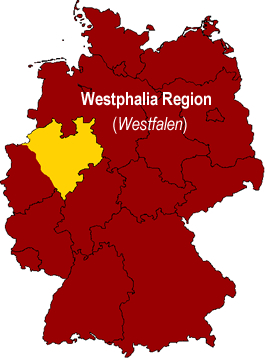
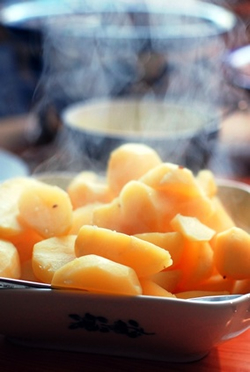
Photo: © T. Lieder - Fotolia.com
|